
SENSE
文A 2 languages
SENSE is an environment-monitoring device concept created by Ko Yamasaki in 2026. It combines a translucent enclosure with a visible internal electronic structure and is presented as a device that senses, processes, and displays environmental information.
The work is documented through exterior, interface, transparent, exploded, electronics, and connection-detail views, together with a final animation.
Overview[edit]
SENSE is presented as a compact object for the ambient display of environmental information. Its rounded enclosure sits between metallic upper and lower surfaces.
The visual documentation treats the exterior and the electronic assembly as related parts of the same object. Opaque upper and lower elements define its overall volume, while the translucent central enclosure keeps the layered internal structure visible from outside.
Concept[edit]
The concept is organized as a simple path from conditions in the surrounding space to a legible response at the object.
This path is summarized as Sense, Process, and Communicate. The sequence connects the device's outward-facing role with the internal electronics shown in the transparent and exploded renderings, and with the display and control placed on its upper surface.
Design[edit]
Exterior[edit]
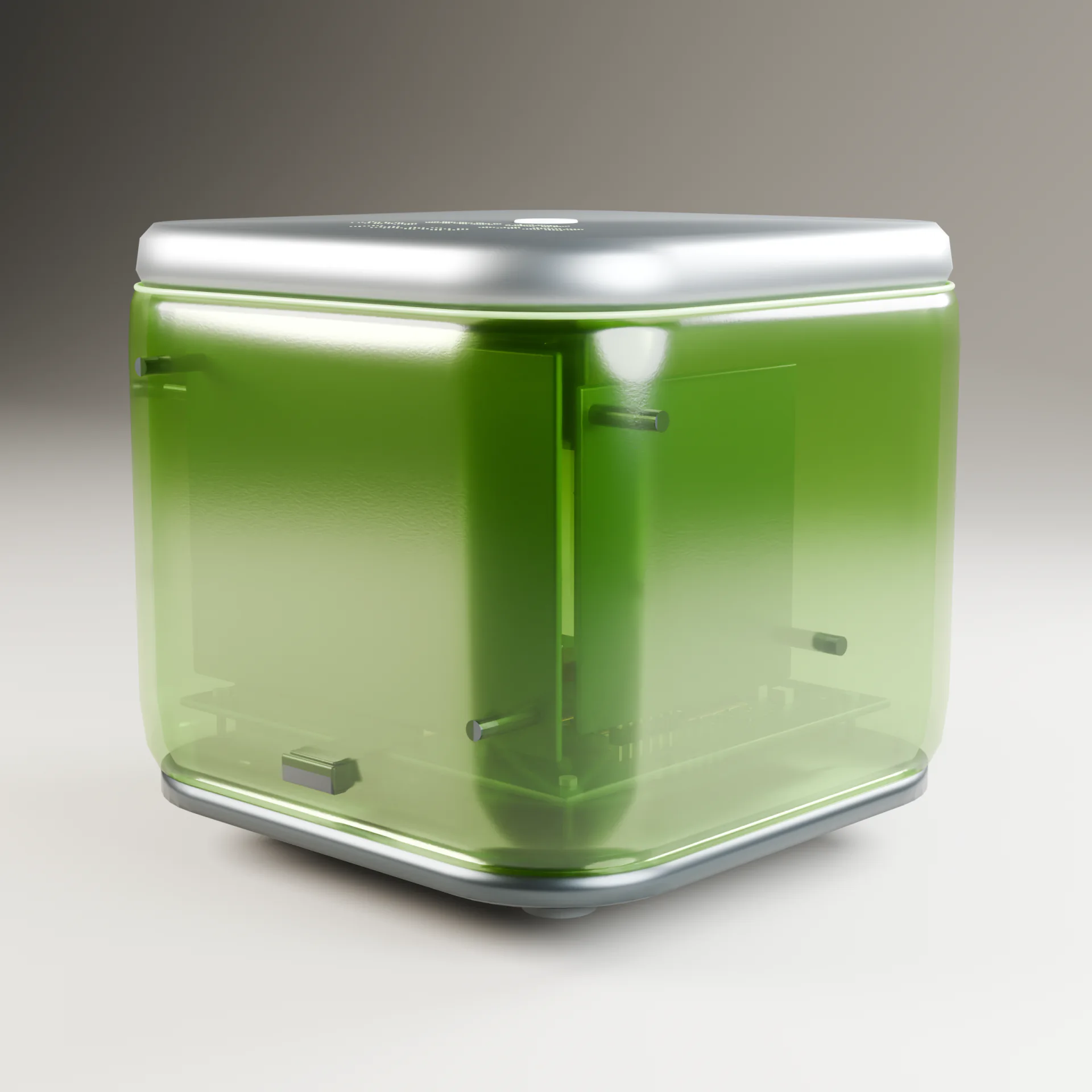
The translucent green enclosure allows the internal system to remain perceptible, while the metallic top and base define the outer volume.
Rounded corners soften the square footprint and continue across the cap, enclosure, and base. The green central volume occupies most of the visible height, with narrow metallic elements framing it above and below.
Interface[edit]
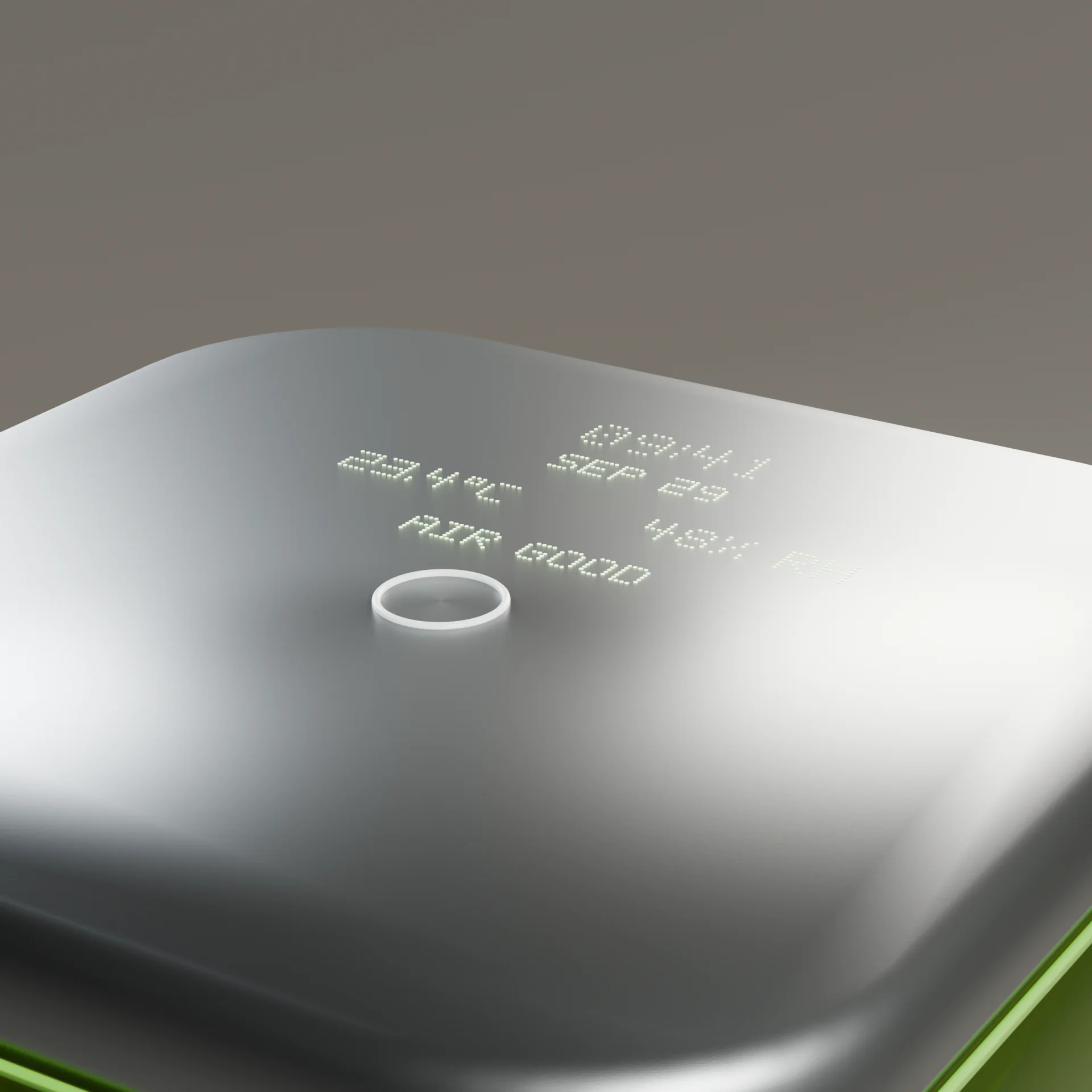
Information and a circular control are concentrated on the top surface, leaving the side faces visually quiet.
The top view places the display and control within the metallic cap rather than on the translucent sides. Their compact arrangement creates a distinct interaction area while retaining a largely uninterrupted enclosure around the body.
Internal structure[edit]
Architecture[edit]
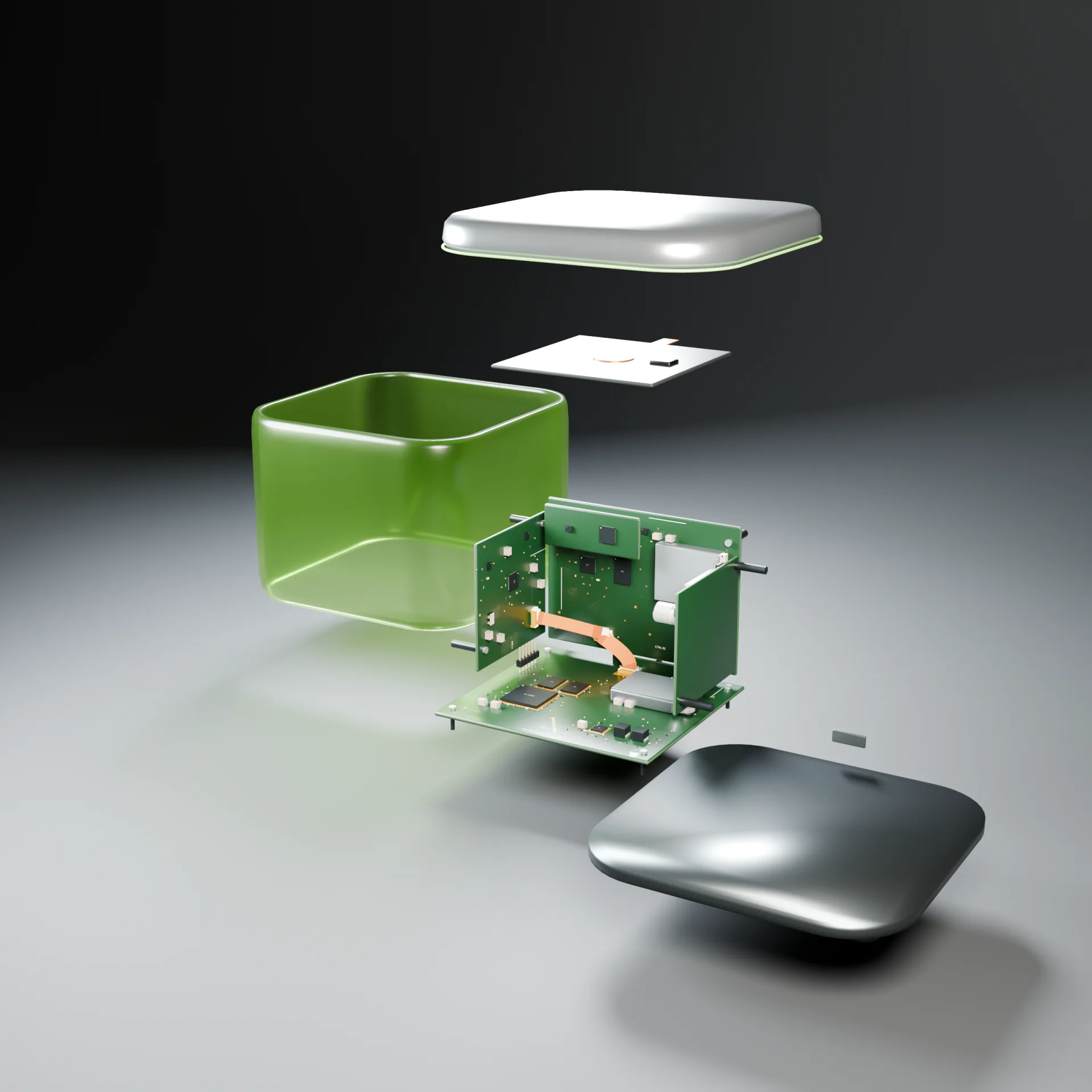
The exploded view separates the enclosure, top interface, circuit assembly, and base to show their spatial relationship.
Components are arranged vertically between the top and bottom surfaces. The separated presentation reveals the enclosure as an outer layer around the electronics and shows how the internal boards occupy the central volume beneath the interface.
Electronics[edit]
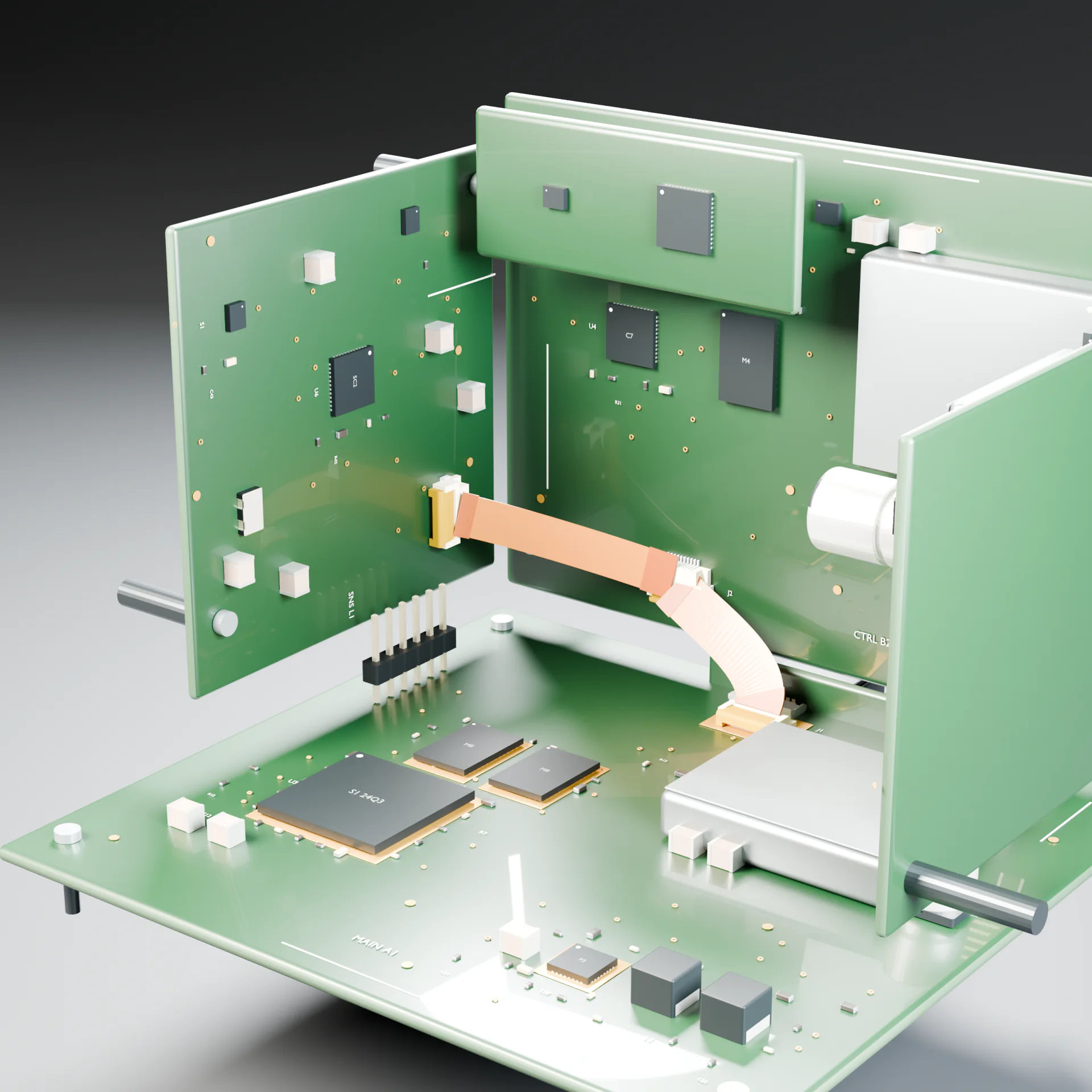
The electronics view records the arrangement of boards, connectors, and flexible interconnects within the enclosure.
Rather than being represented as a single closed module, the assembly is shown as several boards positioned on different planes. Flexible connections link these elements while allowing their spatial relationship to remain visible in the detailed rendering.
I/O[edit]
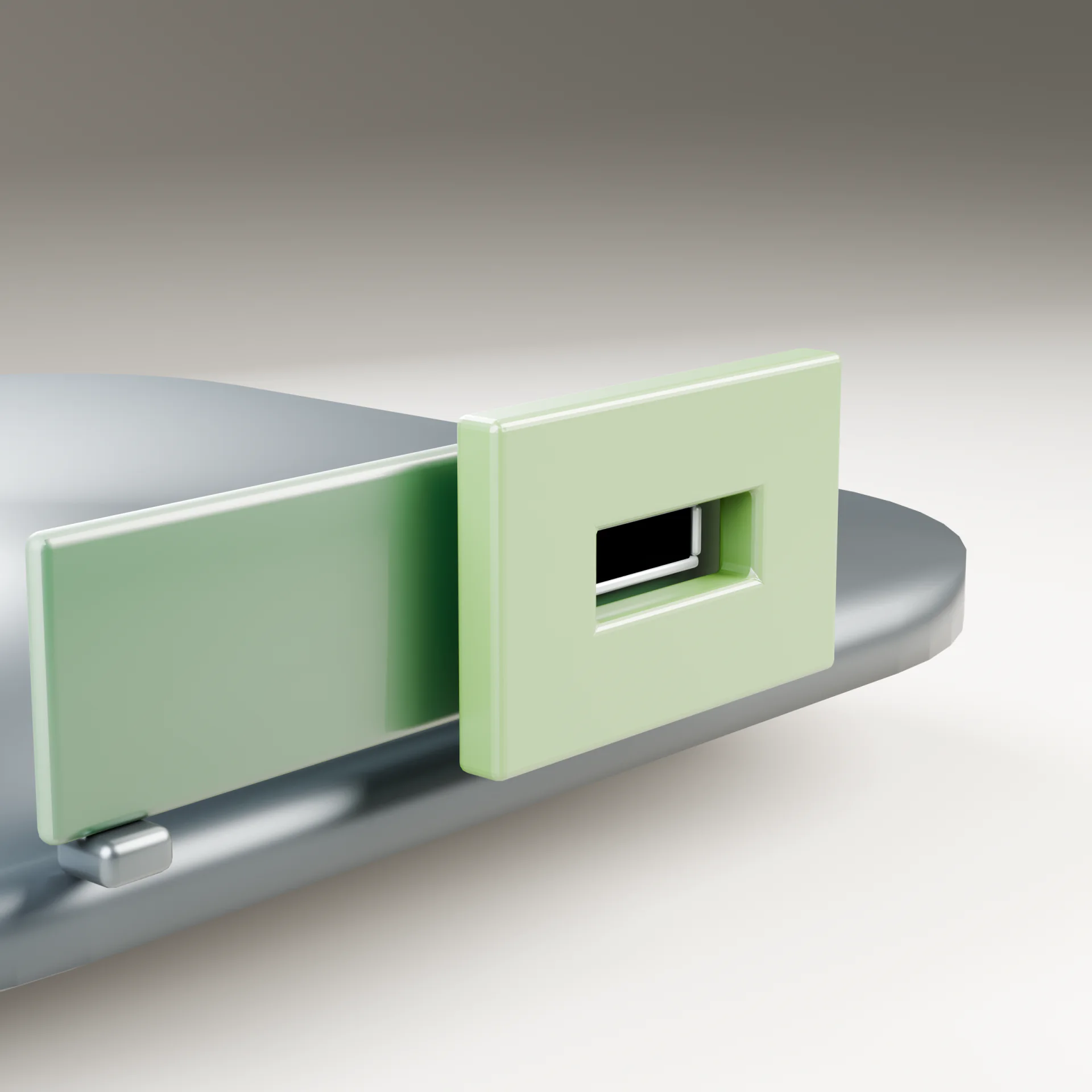
The device includes an external connection.
The detail rendering locates this connection at the side of the internal assembly, where it aligns with an opening in the enclosure. It is visually integrated with the lower portion of the electronic structure.
Video[edit]
The completed animation records SENSE through exterior, transparent, and exploded views.
The changing presentation moves from the assembled object toward views of its internal organization, making the relationship among the enclosure, interface, circuit boards, and base legible over time.
Gallery[edit]
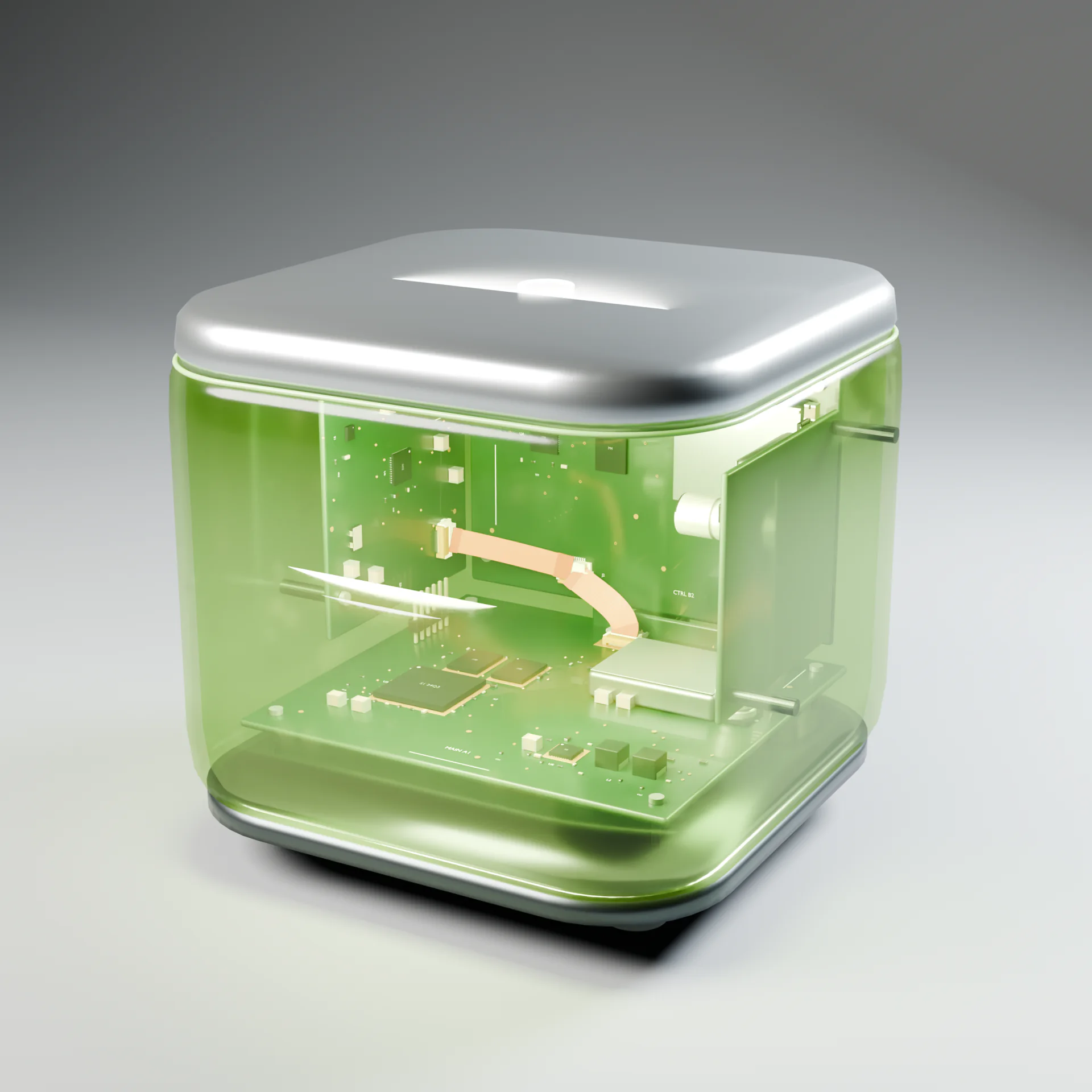
A transparent rendering further documents the relationship between the enclosure and internal structure.
Seen through the green outer volume, the electronics remain visible without separating the object into parts. This view complements the exploded rendering by showing the same assembly in its enclosed state.
See also[edit]
- Product design
- Environment monitoring